

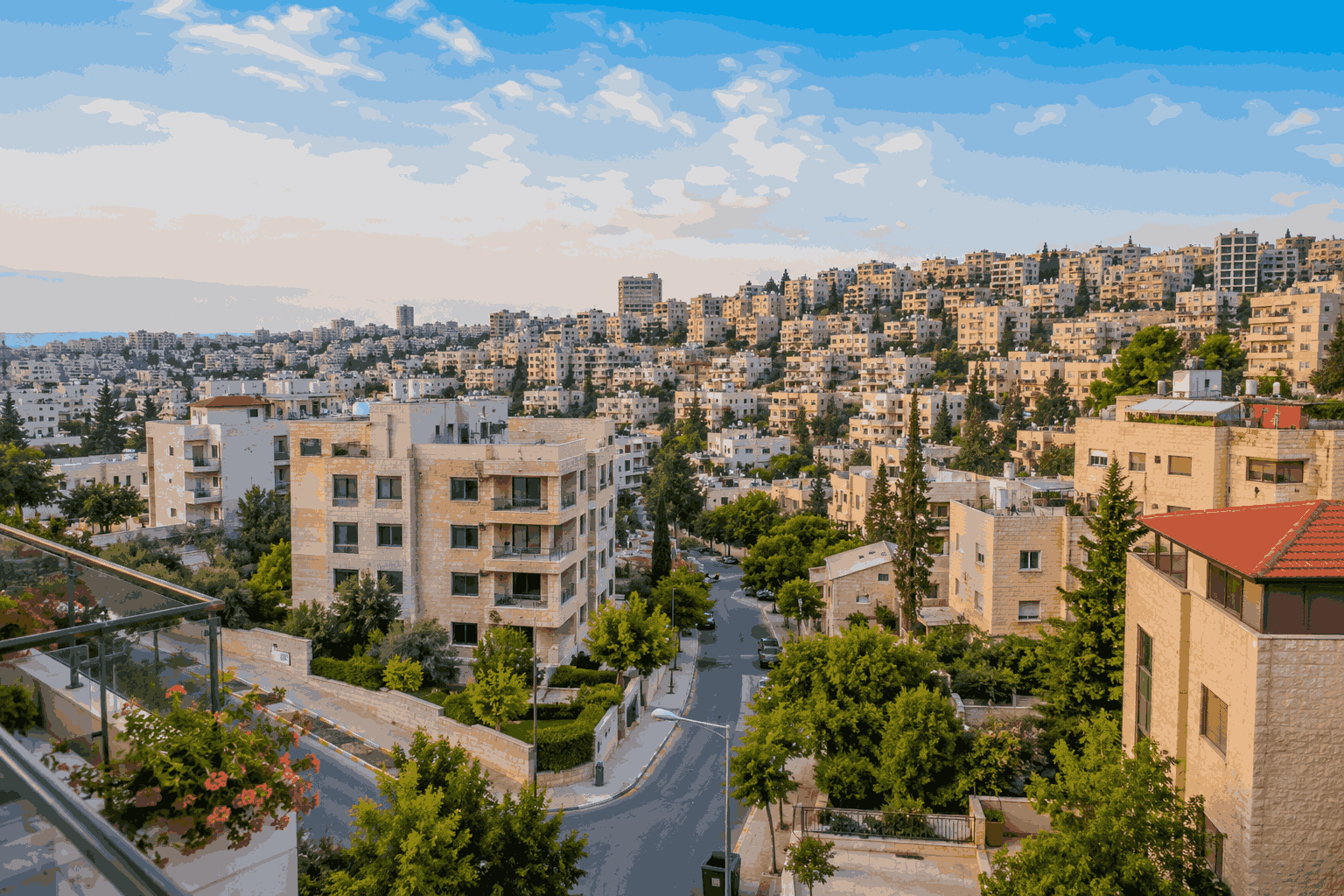

Family Apartments in Amman: Best Neighborhoods for Comfortable Living

Finding a new apartment is rarely the hardest part of moving. Choosing the right neighborhood usually takes much longer.
A spacious living room or a modern kitchen may stand out in property photos, but those features become less important if the nearest supermarket is twenty minutes away, the morning school run turns into an hour of traffic, or your children have nowhere nearby to spend an evening outdoors.
That is why many people searching for family apartments in Amman begin by comparing neighborhoods before they compare apartments.
Amman isn't a city where every district feels the same. Drive from one area to another and you'll notice the change almost immediately. Some neighborhoods are busy from early morning until late at night, lined with cafés, offices, and shopping streets. Others are quieter, with tree-lined roads, residential buildings, and parks where weekends move at a slower pace.
The best place to live depends less on what appears in a rental advertisement and more on how your family spends an ordinary day.
Parents with young children often place schools at the top of their list. Teenagers usually want reliable internet, shopping malls, sports clubs, and places to meet friends. Working professionals look at commuting time, parking, and easy access to business districts. Grandparents living with the family may need hospitals and pharmacies within a short drive.
Every household measures a neighborhood differently.
The good news is that Amman offers several areas that have earned a strong reputation among local residents and expatriates alike. Each has its own personality, rental market, and pace of life.
Before looking at individual neighborhoods, it helps to understand what separates a comfortable family area from one that simply looks attractive on paper.
What Makes a Neighborhood Comfortable for Family Life?
Ask ten families why they chose their apartment and you'll probably hear ten different answers. Yet most decisions come back to the same handful of everyday needs.
The first is convenience.
Children have school every morning, groceries need replacing every week, medical appointments appear without much warning, and parents rarely want to spend half the day driving across the city for simple errands.
Living close to essential services makes daily routines much easier.
Schools naturally influence many rental decisions. Some parents are happy with a fifteen-minute drive if it means securing a larger apartment. Others would rather pay a little more to reduce travel time during the school week.
Healthcare matters just as much. Knowing that a trusted clinic, pharmacy, or hospital is only a few minutes away provides peace of mind that doesn't show up in apartment photos.
Safety also shapes how people experience a neighborhood.
That doesn't simply mean crime rates. Parents notice traffic speed on residential streets, the availability of sidewalks, street lighting after sunset, and whether children can play outdoors without constant concern.
Parking may sound like a small detail during an apartment search, but many residents quickly discover otherwise. Returning home after work only to circle several blocks looking for a parking space soon becomes frustrating. Buildings with secure parking save both time and stress.
Noise deserves attention as well.
Some apartments look perfect during a daytime viewing but sit beside busy roads that become crowded every evening. Spending a little time walking around the neighborhood before signing a lease often reveals far more than an online listing ever could.
People searching for family apartments in Amman sometimes focus heavily on interior finishes while overlooking the surroundings. In reality, the neighborhood usually has a greater impact on day-to-day life than the color of the kitchen cabinets or the style of the flooring.
Abdoun: One of Amman's Most Established Residential Areas
If you ask long-term residents to name neighborhoods that continue attracting families year after year, Abdoun almost always appears near the top of the conversation.
Its popularity hasn't happened by accident.
Over time, Abdoun has developed into one of the city's best-balanced residential districts. Modern apartment buildings sit alongside established homes, tree-lined streets soften the urban landscape, and many essential services are only a short drive away.
Morning routines tend to feel more manageable here than in many parts of the city. Several respected private and international schools are located within easy reach, reducing the amount of time children spend travelling before classes begin.
Parents often mention that convenience becomes the biggest advantage after moving into the area.
Buying groceries doesn't require crossing half the city. Pharmacies, bakeries, cafés, banks, gyms, and medical clinics are scattered throughout the neighborhood, allowing several errands to be completed in one trip.
Healthcare is another reason Abdoun remains attractive. Pediatric clinics, dentists, specialists, and hospitals are all nearby, which becomes especially valuable when unexpected appointments arise.
Housing also appeals to larger households.
Many apartment buildings include three or four-bedroom layouts, underground parking, elevators, secure entrances, and storage areas. Balconies are generally more generous than those found in older apartment blocks elsewhere in Amman.
That doesn't mean every street feels identical.
Properties facing major roads experience noticeably more traffic, particularly during school opening and closing hours. Walking just a few streets farther into the neighborhood often changes the atmosphere completely. Residential roads become quieter, traffic slows, and the surroundings feel more relaxed.
Rental prices reflect the area's popularity.
Abdoun isn't usually the cheapest place to rent, yet many families accept the higher monthly cost because everyday life becomes easier. Less time spent commuting, easier access to schools, and nearby services often outweigh the difference in rent over the course of a year.
Anyone considering family apartments in Amman should visit Abdoun more than once before making a decision. A weekday morning, a weekday evening, and a weekend visit provide a much clearer picture of how the neighborhood functions than a single property viewing ever will.
Deir Ghbar: Space, Quiet Streets and a Slower Pace
Not every family enjoys living close to busy shopping districts.
Many prefer residential streets where traffic eases after the morning commute and evenings remain relatively calm. Deir Ghbar has become one of those neighborhoods.
Walking through the area, the difference is noticeable. Residential buildings dominate much of the landscape, and daily life feels less hurried than in heavily commercial districts.
Apartment sizes are another reason many households choose this part of Amman.
Living rooms tend to be more generous, balconies are often larger, and three-bedroom layouts are common. Families planning to stay several years usually appreciate having additional space as children grow older.
Newer apartment buildings have added modern features without changing the neighborhood's residential character. Secure entrances, elevators, covered parking, and updated interiors have become increasingly common across recent developments.
Schools, supermarkets, pharmacies, cafés, and medical centers remain within comfortable driving distance, yet the streets themselves rarely feel overcrowded.
Parents sometimes describe Deir Ghbar as the kind of neighborhood where evenings feel quieter after a busy working day. That slower pace becomes one of its biggest strengths.
Although rental prices remain above the city average in certain parts of the neighborhood, larger floor plans often provide better value than smaller premium apartments elsewhere.
People comparing family apartments in Amman frequently narrow their shortlist to Abdoun and Deir Ghbar. The final decision usually comes down to lifestyle rather than price.
Those wanting quick access to restaurants, cafés, and commercial activity often lean toward Abdoun.
Those who place greater value on space and a calmer residential setting usually feel more at home in Deir Ghbar.
Khalda: A Neighborhood That Grows With Your Family
Some neighborhoods become popular because they're fashionable. Khalda became popular because it simply works.
Over the years, it has grown into one of Amman's most practical residential areas. Families don't usually move here because of luxury apartment buildings or exclusive addresses. They move here because daily life is straightforward.
Schools, supermarkets, clinics, pharmacies, banks and restaurants are spread across the neighborhood, so most errands can be finished without driving across the city. Parents juggling work, school schedules and household responsibilities quickly notice the difference.
Housing options are another reason Khalda attracts such a wide mix of residents.
Older apartment buildings often offer surprisingly generous floor plans. Bedrooms tend to be larger than those found in many new developments, and storage space is usually better. Newer buildings, meanwhile, appeal to tenants looking for elevators, secure entrances, underground parking and modern interiors.
This variety creates more flexibility in the rental market. Families with different budgets can usually find something suitable without compromising too much on location.
Traffic deserves a closer look before signing a lease.
Main roads become busy during the morning commute and late afternoon, particularly near schools and shopping areas. Side streets, on the other hand, remain noticeably quieter. Spending half an hour walking around after viewing an apartment often gives a much better understanding of the area than relying on online photographs.
Families comparing family apartments in Amman often discover that Khalda offers a balance that's becoming harder to find elsewhere. Rental prices are generally more approachable than premium districts, yet residents still enjoy convenient access to everyday services.
Children also benefit from having sports clubs, tutoring centres and recreational activities nearby, making after-school routines much easier to manage.
Instead of feeling like a neighborhood designed around commercial activity, Khalda feels like a place where residential life came first.
Sweifieh: Busy Streets, Quiet Corners
Mention Sweifieh to someone visiting Amman for the first time and they'll probably think about shopping centres, restaurants and traffic.
Residents see something different.
Behind the main commercial roads are residential streets where apartment buildings have housed local families for decades. The atmosphere changes quickly once you leave the busiest intersections.
One of Sweifieh's biggest advantages is convenience.
Very few neighborhoods offer such easy access to supermarkets, bakeries, pharmacies, banks, medical clinics, cafés and shopping centres within a relatively compact area. Many residents find themselves driving less because so many daily necessities are close to home.
Families with older children often appreciate the location even more.
Teenagers gain a little independence when shopping areas, cafés, cinemas and fitness centres are nearby. Parents don't have to spend every weekend acting as chauffeurs.
Apartment styles vary considerably.
Older buildings usually provide larger rooms and thicker walls, while newer developments include improved insulation, private parking and updated facilities. Viewing several properties is worthwhile because apartment layouts differ more here than in many newer neighborhoods.
Noise is something prospective tenants should consider carefully.
Apartments facing commercial streets naturally experience more activity throughout the day. Buildings tucked away on quieter residential roads provide a completely different living experience despite being only a few minutes apart.
People looking at family apartments in Amman sometimes dismiss Sweifieh too quickly because they only visit the busiest parts of the district. Taking time to explore the surrounding streets often changes that first impression.
Dabouq: Room to Breathe
Some families aren't looking for the busiest neighborhood or the newest shopping district.
They simply want more space.
Dabouq has earned that reputation over many years. Streets feel wider, buildings are less crowded together and residential developments dominate much of the landscape.
That extra space changes the rhythm of everyday life.
Morning traffic still exists, but the neighborhood doesn't feel as densely built as many central districts. Evenings are generally quieter, making it easier to enjoy balconies, gardens and outdoor areas.
Apartment sizes reflect that character.
Three-bedroom and four-bedroom homes are common, making Dabouq attractive to larger households or families planning to stay in Amman over the long term.
Many newer buildings include features that buyers and renters now expect—secure entrances, underground parking, elevators, storage rooms and modern kitchens—but without sacrificing living space.
Parents often say the neighborhood feels less rushed.
Children have more room indoors, residential streets carry lighter traffic and weekends tend to be calmer than in heavily commercial areas.
Shopping centres, schools and healthcare facilities remain within a comfortable driving distance, although owning a car becomes much more important here than in central neighborhoods.
Families searching for family apartments in Amman often compare Dabouq with Abdoun before making a final decision.
The comparison isn't really about which neighborhood is better.
It's about lifestyle.
Abdoun places restaurants, cafés and business districts much closer.
Dabouq offers quieter surroundings and significantly more living space.
Neither choice is wrong. The decision usually depends on how a family wants to spend its time outside the apartment.
Jabal Amman: A Neighborhood With Its Own Identity
New apartment developments appear across Amman every year.
Jabal Amman doesn't compete with them by trying to look newer.
Its appeal comes from something entirely different.
Tree-lined streets, historic buildings, local cafés and a strong sense of community give the neighborhood a character that's difficult to recreate elsewhere.
Many apartment buildings date back several decades, yet that's exactly what attracts many renters.
Living rooms often feel larger.
Ceilings are higher.
Windows allow more natural light.
Balconies overlook mature trees instead of neighbouring towers built only a few metres away.
Walking through the neighborhood reveals why so many residents stay for years.
Corner cafés fill with regular customers.
Small grocery shops know many of their customers by name.
Restaurants sit beside bookshops and galleries rather than large commercial developments.
Parents searching for family apartments in Amman sometimes overlook Jabal Amman because online listings rarely capture what makes the neighborhood special.
This is one of those places that deserves to be experienced on foot.
Spend an afternoon walking through its streets instead of driving straight to an apartment viewing.
Notice how children play outside after school.
Watch people gathering at local cafés.
Pay attention to the slower pace compared with nearby business districts.
Parking can be more challenging in certain parts of the neighborhood, particularly around older buildings without dedicated spaces. Confirming parking arrangements before signing a lease avoids unnecessary surprises later.
Families who appreciate established communities rather than newly built residential compounds often feel immediately comfortable here.
The neighborhood doesn't rely on luxury to leave a lasting impression.
Its strength comes from atmosphere, history and everyday livability.
By this stage, most families have narrowed their choices to two or three neighborhoods.
The next step isn't deciding which area has the newest apartment.
It's deciding which neighborhood matches the way your family actually lives.
Before You Say Yes to an Apartment
After visiting a few properties, it's easy to become distracted by polished kitchens, new flooring or a large balcony. Those features certainly matter, but they shouldn't be the deciding factor.
Spend a little extra time looking beyond the apartment itself.
Open the windows and listen. A quiet building can feel very different if it overlooks a busy road or a popular late-night café.
Walk around the block instead of leaving immediately after the viewing. You'll quickly notice where residents buy groceries, where children wait for school buses and how much traffic passes through the area.
If the apartment includes a parking space, ask to see it. Some underground spaces are easier to access than others, especially in older buildings.
Inside the apartment, turn on the taps and check the water pressure. Flush every toilet. Test the kitchen cupboards and open every window. These small checks take only a few minutes and can reveal maintenance issues that photographs never show.
Don't hesitate to ask how the building is managed. A well-maintained entrance, clean stairways and working elevators usually reflect an active management team and cooperative residents.
Questions Worth Asking the Landlord
Many renters focus on negotiating the monthly rent but forget to ask questions that become important after moving in.
Before signing any agreement, clarify these points:
What is included in the rent?
Who handles maintenance inside the apartment?
Is there a building maintenance fee?
Are water, electricity and internet registered and ready to use?
How often are common areas maintained?
Are pets allowed if you have one?
Is visitor parking available?
Has the apartment had any recent plumbing or electrical work?
Lease agreements in Jordan are commonly arranged for one year, although shorter terms are available in some cases. Before signing, read the agreement carefully and make sure responsibilities for repairs, utilities and early termination are clearly explained.
Think About the Year Ahead, Not Just Moving Day
The apartment that feels perfect today should still suit your family twelve months from now.
A toddler may soon need a nursery.
A primary school student may be changing schools.
Teenagers often begin spending more time at sports clubs, tutoring centres or after-school activities.
Choosing a neighborhood that supports those changes can save both time and money later.
Many people searching for family apartments in Amman focus entirely on current needs. Looking one or two years ahead often leads to a better decision.
Comparing Popular Family Neighborhoods
| Neighborhood | Best Known For | Things to Consider |
|---|---|---|
| Abdoun | International schools, modern apartments, embassies and premium services | Higher rental prices |
| Deir Ghbar | Spacious homes, quieter streets and residential atmosphere | Daily errands usually require a car |
| Khalda | Good balance between cost and convenience | Traffic increases on main roads during peak hours |
| Sweifieh | Shopping, restaurants and central location | Choose quieter side streets if noise is a concern |
| Dabouq | Larger apartments and peaceful surroundings | Less convenient without a private vehicle |
| Jabal Amman | Character, mature neighborhoods and central location | Parking varies depending on the building |
Each neighborhood has its own strengths. There isn't a universal "best" choice because every household follows a different routine.
Small Details That Often Get Overlooked
After speaking with property agents across Amman, one piece of advice appears repeatedly.
Visit the apartment more than once.
An afternoon viewing rarely tells the whole story.
Try visiting again during the evening when residents have returned home. Notice how busy the streets become, whether parking fills quickly and how noisy the neighborhood feels after sunset.
If children will be walking to school, check the route yourself rather than relying on a map.
Measure travel time during weekday mornings instead of weekends. A journey that takes ten minutes on Friday can take considerably longer on a working day.
These practical observations often make the difference between enjoying an apartment and regretting the decision a few months later.
A Neighborhood Should Fit the Way You Live
Choosing an apartment isn't only about finding the right building. It's about finding a neighborhood where daily life feels comfortable.
Some families enjoy the energy of Sweifieh, where shops, cafés and services are always close by. Others prefer the quieter streets of Deir Ghbar or the open residential feel of Dabouq. Khalda continues to appeal to households looking for good value without giving up convenience, while Abdoun remains a favourite among people who want easy access to schools, healthcare and modern amenities.
The apartment itself may change in a few years.
The memories your family creates in the neighborhood often last much longer.
If you're comparing family apartments in Amman, take time to explore each area before making a decision. Walk the streets, visit local shops, drive the school route and picture an ordinary weekday rather than moving day.
A neighborhood that makes everyday life easier is usually the one that feels like home long after the boxes have been unpacked.
News insight
 Jul 03, 2026
 Family Apartments in Amman: Best Neighborhoods for Comfortable Living
Family apartments in Amman are available across neighborhoods with different lifestyles, schools, an...
 May 30, 2026
 Before Renting in Amman, Spend 10 Minutes Getting to Know These Neighborhoods
Choosing an apartment in Amman involves more than rent and square footage. See how Abdoun, Sweifieh,...
 May 15, 2026
 Best Neighborhoods in Amman for Expats Working Remotely
Looking for a furnished apartment for rent in Amman while working remotely? Explore the neighborhood...